Elinor Rowlands

Elinor Rowlands

artists
elinor rowlands

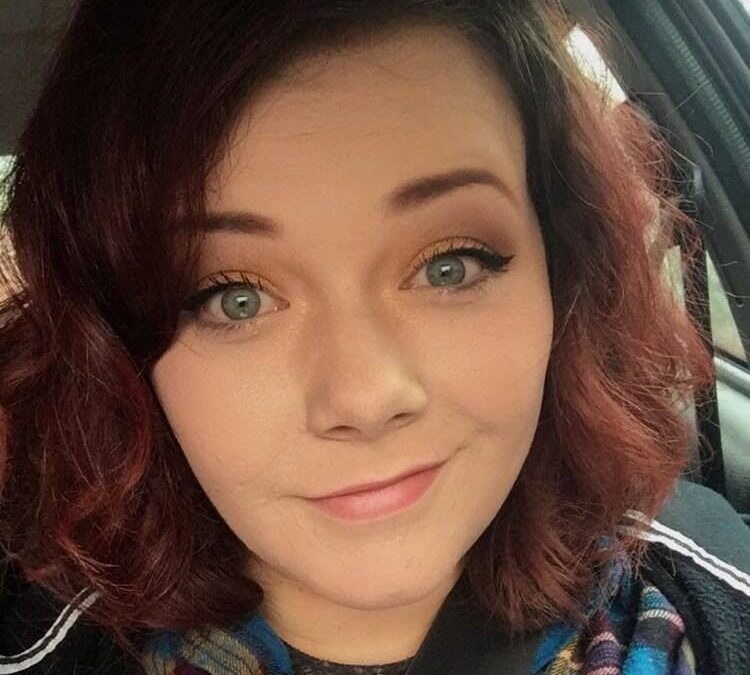
Founder of Magical Women, art psychotherapist and arts mentor, Autism/ADHD coach, Arts Researcher, ND training in arts organisations, Artist and Musician

Bio

Elinor is the founder of Magical Women and created this framework from her background in education, disability services, and art psychotherapy. She is a practicing art psychotherapist and arts mentor, as well as autism/ADHD employment coach. Elinor supports artists from all walks of life and all disciplines in both education and employment. She is a postgraduate researcher doing her PhD at the Artistic Research Centre, Nottingham Trent University. 

Funded projects include the birth of Magical Women (2020, Arts Council England), Biodivergent Sites and Sounds (2023, Arts Council England) and Magical Women (2023, The Supporting Act Foundation). Elinor has worked with a wide range of partners including: Drake Music Scotland, PRS Foundation Beyond Borders, Canal & River Trust, National Galleries Scotland, Creative Health Camden, Tate Modern, Shape Arts, Spread the Word, Wellcome Collection, Cole’s Gallery, Disability Arts Online, Drake Music England, The Unfamiliars, Camden People’s Theatre, Battersea Arts Centre, The Minories art gallery and many more. 


Artist Statement 

From a very young age, Elinor always felt like she came from the stars. Shamans and healers would tell her she was one. Elinor has travelled extensively and during all her trips has had magical experiences reading photographs, and energies of the people she has come into contact with. Elinor is a storyteller who paints in rich and vivid colours from an unflinchingly feminine gaze. Telling stories via autoethnographic fiction, she conjures experiences that are transdisciplinary. As a Neurodivergent and Disabled artist, Elinor’s work is mainly reflective of the autistic/ADHD experience moving between grief and joy in quick succession; the way emotions are so often deeply felt at such incredible speed within autism. In her art texts, facilitation and live/sound art, Elinor uses oracles and tarot as well as ritual and magic through journeying and site-specific forest trails or trails by or on the water.

Why MW is important

Our emotions are so often reduced because we are so often perceived as being over-emotional, highly sensitive or a negative connotation due to feeling too much. Being able to slow these emotions down by asking for our needs through imagery and mantra, means we can convey what we mean when words fail us, or can not quite grasp the experience we are in. Magical Women has contributed to projects such as the Communication Cards that reduce our barriers, and support us to ask or convey our needs more accessibly to both neurodivergent and neurotypical populations. Art workshops such as Making Space for Art and Magical Journeys as well as our events provide space for nourishment, nurture and sharing practice: to commune, to gather and to experience together without the need for small talk or networking. 
 

Talulah Miers

Talulah Miers

artists
Talulah Miers

Painting, sculpture, installations, performance, objects, murals, dioramas, improvisation, poetry and other works with words

Bio

I am a disabled creator from Brighton. I’ve been making art, writing and playing music since I was tiny. The extent of my disabilities has meant I’ve only recently been able to return to making art. My approach to creativity is diverse. As an artist I have explored painting, sculpture, installations, performance, objects, murals, dioramas, improvisation (on the piano and with voice), poetry and other works with words. I tend to explore a theme in many forms – the connecting thread is the theme. The theme dictates the ideas, and the ideas dictate the forms – finished pieces often use multi media. I’m interested in psychology and the environment – my pieces often explore an intersection between both. I often find a motif in nature that resonates with a hidden meaning, exploring it until it has fully revealed what that is. It is an evolution of sorts.


Artist Statement 

Currently my work is for myself. But my most recent work is exploring neurodiversity I’ve been collecting snail shells for a few years, fascinated by the shape and markings on them. I’m exploring images of many shells clustered together, but also forming them in clay – expressing themes of sanctuary, home and autonomy. I’m additionally interested in painting onto them directly for use in small installations/dioramas.


Why MW is important

Autism is a deeply misunderstood condition. Autistic people often face adversity, conflict or just misunderstanding during moments of extreme stress when they most need support and space. A lot of trauma could be avoided with the help of these cards.

Gem Spittle

Gem Spittle

artists
Gem Spittle

Illustrator

Bio

Gem Spittle is an Illustrator with ADHD from West Yorkshire. Her interests include character design, children’s media, and animation. All aspects of her work stem from her understanding and passion for archetypes, story, and symbolism. Officially trained in film, art, and design; Gem is always excited to turn her hand to anything creative and intends to do so with an underlying sense of playfulness. Ideally, Gem wants her work to make people feel something.

Artist Statement 

Gem is currently focussing on building her skills in character design and digital illustration in procreate, whilst also dabbling in animation!

Why MW is important

Magical Women’s Communication cards project can be invaluable for neurodivergent people to express something non-verbally. Some participants created cards to use situationally as you would with classic communication cards. We were also given the freedom to use our cards to express an idea as more of a kind of mantra. My mantra was a reminder to myself and others that I should not be forced to experience discomfort and guilt, or be made to bend over backwards while fighting the way my brain naturally functions. A reminder that I have a right to accommodations and to ask for help for the struggles I have due to ADHD.

Jo-Anne Cox

Jo-Anne Cox

artists
Jo-Anne Cox

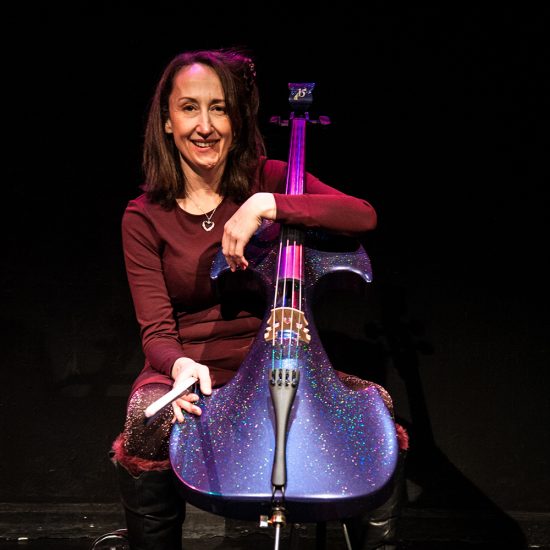
Musician, composer and writer

Bio

I play and write for electric cello. My inspirations are anything from people suggesting a theme, processing my own life experiences through cello and responding to other artists, story telling, poetry, spoken word,  art and mark making.
I like to write and record my own compositions and respond creatively with cello  to live art poems, spoken word and stories. I enjoy opening up Electric Cello to a wider audience by working with vibrotactile technology, interactive creative technology, sensory engagement, creative use of BSL and captioning.

Artist Statement 

 My work is for anyone who loves moody, atmospheric trippy electric cello and anyone who likes responding to this creatively. I try to make my work as accessible as possible, subject to my own access issues and how much professional and financial support is available.

Why MW is important

Magical Women’s Communication cards project are very important to me because most of the time I cannot describe my communications needs or make the space to do so.

Jo-anne Cox is a creative contemporary cellist. As well as performing solo, she collaborates with musicians, singer songwriters, spoken word artists, visual artists and film makers.   She is a composer of seriously sensuous work,  who loves cross-artform collaboration and audience interactive performance. 

The Dragon Cello and I write and perform our own unique compositions, or “cello songs”  wild, passionate, rebellious, dark, haunting, deeply moving, hopeful, joyous,  the Dragon cello sings soars, whines, cries out,  dances, utters, splutters, roars,  across looped textures, bass and rhythms.

Cox performed Journey to the Stars (2020) with Elinor Rowlands, on the MW platform, an online concert to worldwide audiences where they both created live music, song and text alongside painting and artmaking. Cox has also participated and contributed to the designing of Communication Cards in the Magical Women’s Communication Cards (2021) workshop. 

Collaborating with Elinor on other projects, notably Arts Council funded Biodivergent Sites and Sounds, Cox says:

“Representing the darkest depths of the canal through creative exploration with my cello and FX unit. Improvising and journeying with Elinor and Dee and experiencing moments in the  flow where it all came together as one, without those moments being planned. Being part of  a music and digital experience that all stems from a real living canal. Seeing the stunning digital work by Elinor in collaboration with Charles.  Experiencing the power of an  autistic led project that was not controlled by a “helping” organisation and seeing how this removed barriers.” 

Cat Brown

Cat Brown

artists
Cat Brown

Writer, art educator and body psychotherapist.

Bio

Cat is an art educator and movement psychotherapist from Somerset. Cat enjoys to create art in many forms, particularly poetry. She is currently completing her first concept poetry collection exploring the darker sides of human experience.


Artist Statement 

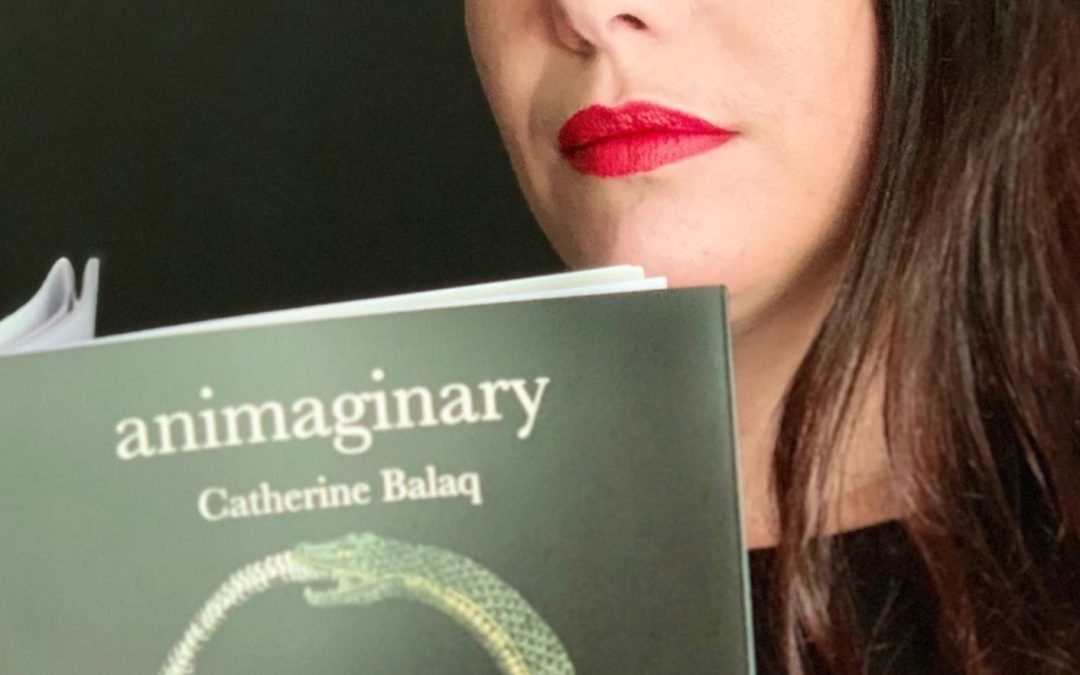
Catherine Balaq is a writer, art educator and body psychotherapist. Her poetry play ‘Fuck the Moon’ was commissioned by Paper Nations and short-listed for the Bristol Old Vic Open Sessions 2019. Short-listed for the Bridport Poetry Prize 2021and a finalist of Lyra Festival. In 2022 she is shortlisted for the London Library Emerging Writers programme, the Dai Fry award and winner of The Poetry School MA scholarship. She is co-editor at Black Cat Press and working on her first novel. 

‘Animaginary’ is her debut poetry collection. animaginary is a journey through the archetypes of the subconscious. The beasts of the underworld hold our hopes and fears, life in one hand and death in the other. The collection moves through each incantation, entwining animism and psychology with the intention of personal alchemy. It ends with ‘The World’, eating its own tail in a metaphorical transformation. 

The reader will meet the author in a mythical landscape which explores living and working through the darker side of the self in a Hecartic tradition. Animal spirits haunt through the collection as shapeshifters, bringing self actualisation in degrees both terrifying and rewarding. The poems speak of family, grief, gender roles, class and body politics.


Why MW is important

Participating in Magical Women Communication Cards project was important to me because Having a visual representation of feeling and experience is invaluable. An image can say a thousand words and often transcends conscious thoughts to resonate directly with the body.